3 min read

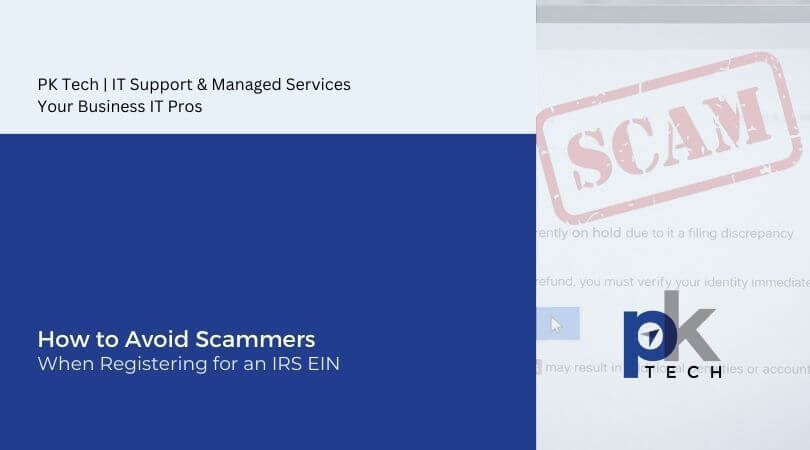
How to Avoid Scammers When Registering for an IRS EIN

How to Avoid Scammers When Registering for an IRS EIN

Starting a new business comes with a long checklist—opening bank accounts, setting up payroll, registering with state agencies, and obtaining a federal Employer Identification Number (EIN).

Unfortunately, the EIN registration process has also become a common target for scammers who take advantage of new business owners and first-time filers. As a managed IT provider that works closely with CPA firms, we often see the technology and security side of these scams—and the costly consequences when businesses fall for them. Understanding how these scams work and how to avoid them can protect both your finances and your sensitive business information.

Who Needs an EIN?

The IRS issues tax IDs (referred to as EINs – Employer Identification Numbers) online for businesses, estates, trusts, etc., at no cost. You, your attorney, or your CPA can apply directly through the IRS’s platform. It’s important when doing so that you do not, under any circumstances, use a third-party website to apply for a tax ID/EIIN. (Yes, third-party websites are listed ahead of the IRS’s website on most search engines.) Beware. Do not be scammed. Never give your information to unknown third-party websites.

Understand Where EIN Registration Actually Happens

An EIN is issued only by the Internal Revenue Service (IRS). The underlying application is Form SS-4, which can be submitted online, by mail, or by fax directly through the IRS.

However, many third-party websites advertise EIN “registration services” that appear legitimate but charge unnecessary fees. Some of these sites are simply overpriced intermediaries, while others are outright scams designed to collect personal or business information.

If a site asks you to pay for something labeled as a “mandatory EIN registration fee,” that’s a red flag. The IRS does not charge a fee for issuing an EIN.

For CPA firms and their clients, the safest practice is always to navigate directly to the IRS website rather than clicking search engine ads or sponsored links. IRS websites use versions of irs.gov (sometimes with a subdomain or forward slash, depending on your exact destination).

Watch for Look-Alike Government Websites

One of the most common tactics scammers use is creating websites that look almost identical to official government pages. They often use domain names that include terms such as “IRS,” “EIN filing,” or “federal tax ID.”

These sites may even copy the design of pages from the Internal Revenue Service website to appear credible. The goal is to trick users into entering sensitive data, such as:

  • Social Security numbers
  • Business owner information
  • Company addresses
  • Banking details

From an IT security standpoint, this is especially dangerous because the information requested on an EIN application is exactly what criminals need to commit identity theft or create fraudulent businesses.

When applying for an EIN, verify that the website domain ends in .gov, which is restricted to official government entities in the United States.

Be Skeptical of Unsolicited Emails or Messages

Scammers also attempt to capture EIN applications through phishing campaigns. Business owners may receive emails claiming they must “complete EIN registration,” “verify EIN status,” or “update tax records.”

These messages often include links to fake forms or requests for attachments containing sensitive business data.

The Internal Revenue Service does not initiate contact through email, text messages, or social media to request sensitive tax information.

CPA firms frequently become the first line of defense here. We recommend that firms train staff and clients to:

  • Never click EIN-related links from unsolicited emails
  • Verify requests directly with the IRS or their CPA
  • Report suspicious emails to IT or security teams

Security awareness training is one of the most effective ways to stop phishing before it causes damage. We recommend such practices to all of our CPA firm clients at PK Tech.

Protect the Sensitive Data Used in EIN Applications

Even when applying through the correct channel, EIN registration involves highly sensitive data. Business owners submit information, including Social Security numbers, responsible party details, and business structure.

This makes EIN documentation a valuable target for cybercriminals.

From our perspective working with accounting firms, strong data protection practices are critical. These include:

  • Secure document-sharing portals instead of email attachments
  • Multi-factor authentication for client portals and tax systems
  • Endpoint protection on staff devices
  • Proper storage and encryption of EIN confirmation documents

When CPA firms implement secure IT environments, they reduce the risk that EIN information could be exposed through phishing, malware, or compromised accounts. Make sure the firm you are working with is practicing these basic cybersecurity principles.

Work With Trusted Professionals

Many business owners rely on their CPA to help register a new EIN, and for good reason. Accountants understand the filing process and can ensure the information is submitted correctly.

However, even professional firms must remain cautious when using online tools or third-party services.

Managed IT providers who specialize in supporting CPA firms help ensure that:

  • Staff access the correct government portals
  • Browsers and networks are protected from malicious redirects
  • Client data is transmitted through secure channels
  • Security policies prevent accidental data exposure

Technology and tax compliance are increasingly intertwined, and protecting sensitive filings such as EIN applications requires expertise from both.

Safely Register for an EIN with No Scams

Registering for an EIN should be a straightforward step in launching a business, but scammers have turned it into a common trap for new entrepreneurs. By using the official IRS website, avoiding look-alike services, staying alert to phishing attempts, and protecting sensitive data, businesses can significantly reduce their risk.

For CPA firms and their clients, cybersecurity awareness is crucial to this process. With the right safeguards—and the support of experienced IT partners—EIN registration can remain exactly what it should be: a quick, secure step toward building a new business.

At PK Tech, we are proud to offer 16 years of experience with a focus on accounting firms. We maintain AICPAs SOC 2 Type II attestation, verified through an independent third-party audit of our security and privacy controls. If your firm wants CPA firm IT support that understands accounting workflows and the compliance requirements that come with them, schedule a call with our team here.

Accounting Software Support Challenges No Vendor Warns You About

Accounting Software Support Challenges No Vendor Warns You About

Most CPA firms evaluate accounting software on features and price. What rarely makes it into the sales conversation is what happens after go-live,...

Read the Full Article
Accounting Firm Tech Solutions That Reduce IT Support Escalations

Accounting Firm Tech Solutions That Reduce IT Support Escalations

Accounting firms depend on technology to keep workflows efficient, data secure, and deadlines on track, especially during high-pressure periods like...

Read the Full Article
How to Conduct a Cybersecurity Audit for Your Accounting Firm

How to Conduct a Cybersecurity Audit for Your Accounting Firm

According to a report from the Association of International Certified Professional Accountants, 60% of accounting firms have experienced some form of...

Read the Full Article